Bring a little bit of the ocean indoors with a hands-on sensory table filled with shells, coral, sand, and other beach treasures. Kids love being able to touch, explore, and investigate real objects, and this simple activity is a wonderful way to encourage curiosity, observation, and vocabulary development.
Thank you for visiting. This post may contain affiliate links to recommended products at no extra cost to you. Read our Disclosures and Terms of Use. Love easy kids’ ideas? Join our free Reader List <--it's FREE.
Hands-on learning has always been one of my favorite ways to teach. Children learn so much more when they can hold something in their hands, turn it over, feel the texture, and ask questions about it. I still remember a magnet exploration table from my elementary school days, and the fact that I can remember it all these years later says a lot about the power of interactive learning. Experiences like these stick with kids!
This ocean sensory table is easy to set up and can spark conversations about marine life, ocean habitats, textures, colors, and even conservation. It works well for preschool, kindergarten, homeschool, or an ocean-themed classroom unit.
Category: Sensory Play
Ocean Sensory Table Supplies
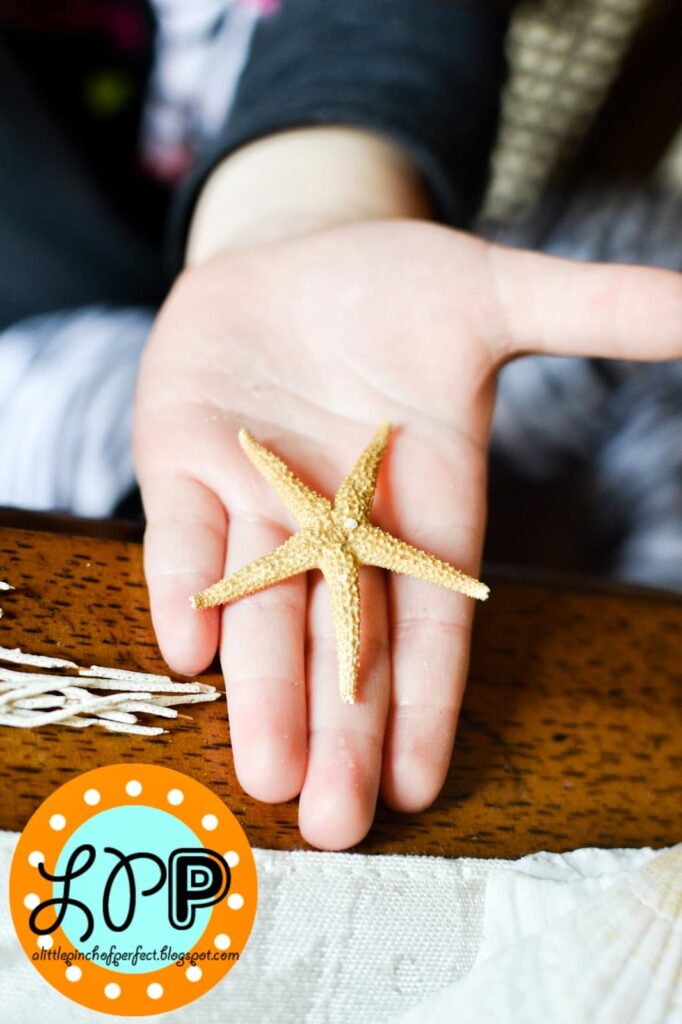
Gather a variety of ocean-inspired items for children to explore:
🦪 Shells
- Turban Shells
- Conch Shells
- Scallop Shells
- Clam Shells
- Mussel Shells
- Abalone Shells
- Sand Dollars
🌊 Ocean Treasures
- Coral
- Seaweed
- Natural Sea Sponge (the “real” SpongeBob!)
- Starfish (and Patrick!)
- Shark Teeth
- Preserved Fish Specimens
- Sand
You don’t need every item on the list. Use whatever ocean treasures you have available. Even a small collection of shells and sand can create an engaging learning experience.
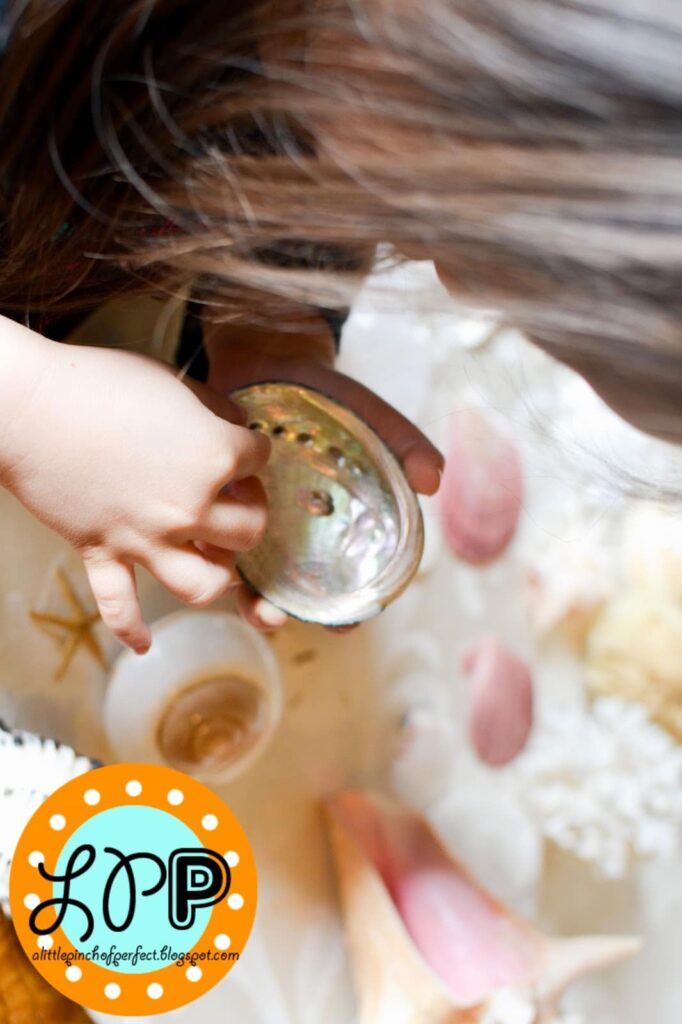
How to Set Up the Activity
I like to begin by introducing each item one at a time. As I hand an object to my child, we talk about what we notice.
Some questions to ask:
- How does it feel?
- Is it smooth, rough, or bumpy?
- What colors do you see?
- Is it heavy or light?
- Does it smell like the beach?
- What do you think lived inside this shell?
Taking time to explore each item together helps build vocabulary and encourages children to make observations like little scientists.
After we’ve talked about all of the treasures, I let my child freely explore the table. Watching what catches their attention is often the best part. They naturally sort, compare, pretend play, and ask questions as they investigate.
Fun Ocean Exploration Ideas
⭐ Sort shells by size, color, or shape.
⭐ Use a magnifying glass to examine details.
⭐ Bury shells in sand and create an ocean treasure hunt.
⭐ Match items from smoothest to roughest.
⭐ Draw favorite shells in a nature journal.
⭐ Compare real ocean items to pictures in ocean books.
And of course, don’t forget to place a large shell up to your ear and listen for the “ocean!”
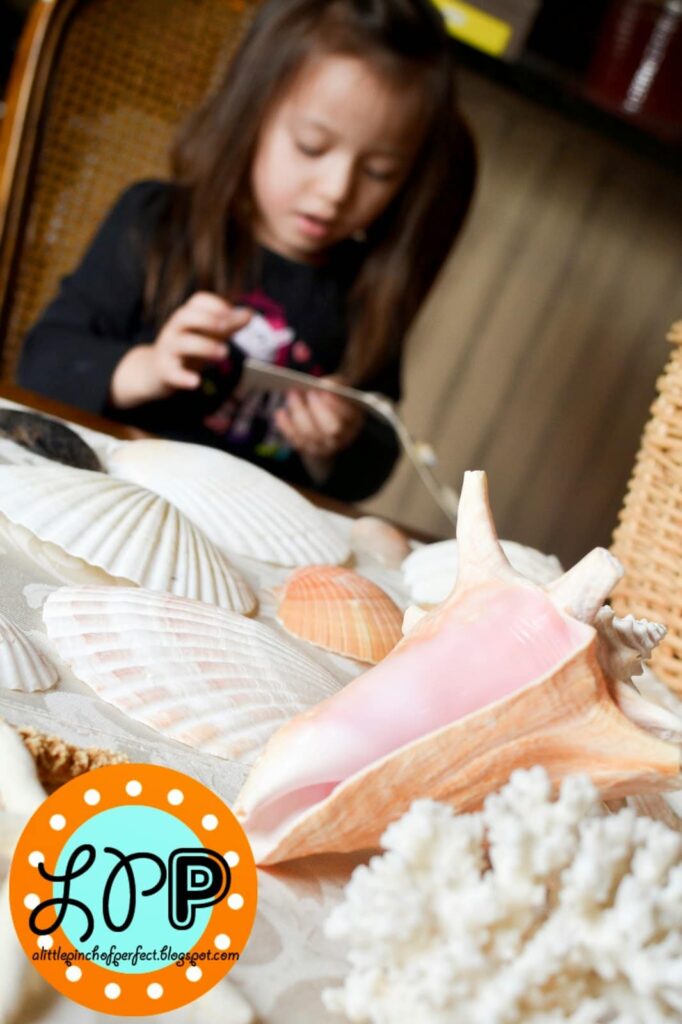
Ocean Sensory Vocabulary Words
Use these descriptive words as children explore:
- Big
- Bumpy
- Cold
- Colorful
- Curved
- Delicate
- Flat
- Grainy
- Hard
- Plain
- Pointy
- Ridged
- Rough
- Round
- Sandy
- Shiny
- Small
- Smooth
- Squishy
- Wet
This simple ocean sensory table is a wonderful way to bring the beach into your home or classroom and encourage meaningful, hands-on learning through play. Kids can explore at their own pace while building vocabulary, observation skills, and a deeper appreciation for the amazing things found in our oceans. 🌊🐚
Some more great Ocean activities: